

The answer? There is no such thing as the right size RV. Why? Because everyone has different needs.
This post is not just about the RV. It’s all that goes with it and it’s not all the bells and whistles you can get in your home on wheels.
I’m a let’s look at the whole picture kind of thinker. It can be a good thing and a bad thing, depending on the situation. With that being said, I encourage you to look at the whole picture when it comes to purchasing your RV. Out here in the RV land, I see all sizes and traveling types. Bigger isn’t always better and smaller isn’t always the easiest.
You want to experience the lifestyle. You want to travel around the country and visit new places, explore landscapes, taste local foods and capture the most breathtaking sunrises and sunsets. Creating these memories that will last you a lifetime.
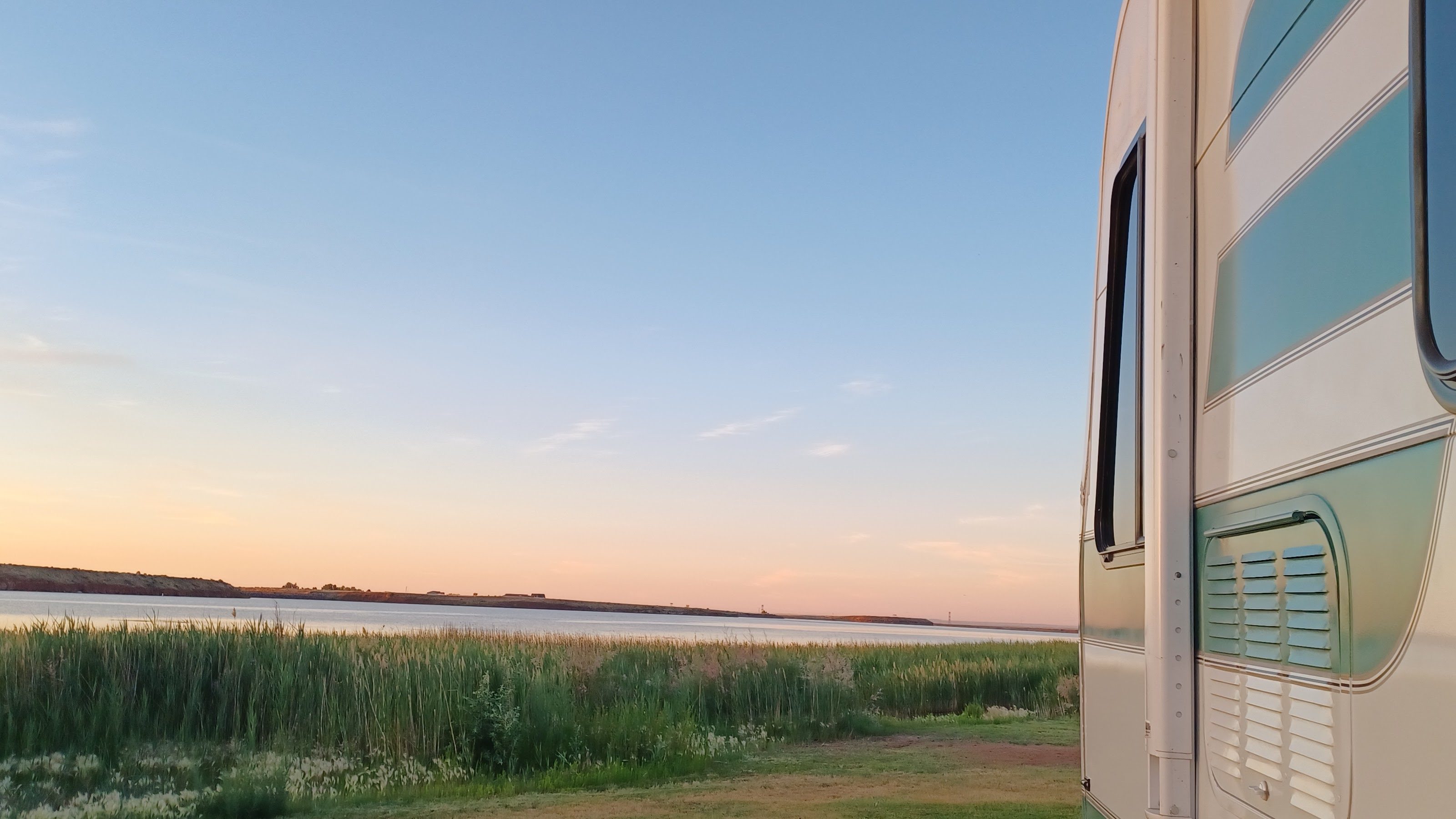
Before capturing these memories, there are a lot of things to consider. It’s more than the fantasy of camping by the beach or sipping hot chocolate by a campfire with your home next to a lakeside forested area. You have to know how to safely get there with the right equipment.
Know what you can tow.
What size RV should I get? I’ve been looking at this 32-foot travel trailer. The dealer says my minivan shouldn’t have any issues towing it. (insert eyeroll here)
In my former career in the moving and storage industry we had a saying when talking to customers about relocation. “That’s not how it works.” And towing a travel trailer with your minivan… well that’s not how it works. Minivans are generally front wheel drive. You will have no control if your trailer starts fishtailing. NONE. I don’t recommend using the family van to tow a trailer. I don’t care what the tow package says. It is not safe. Just because it can, doesn’t mean you should.
When it comes to towing or driving in the RV life, you need to drive differently than you do in your everyday commute. You have to adjust for extra weight, height, width and length.
With reference to weight, this includes your bodies, your day to day needs like clothing, bathroom products, eating and cooking utensils, bedding, and of course pets or kids if you have them. Food and water included. These might seem like trivial details. Put them on a scale and start adding the weight. You’d be surprised at the total weight of these minor items.
Then there is the placement of these mentioned items in your rig. This is where location, location, location comes in handy. Items shift during travel. Securing items in your cabinets, on tabletops, and even what is fixed to walls and overhead compartments is a big deal.
You don’t want to pack the overhead cabinets with a lot of canned goods or household appliances that can come crashing down on you when you open a cabinet. I have seen a few hacks with pillows placed in the cabinets on travel days. Hooks placed on the back walls with Bungy cords. There is the forever old faithful hack of the extension rod adding an extra barrier to keep items from falling out of cabinets. Placement is everything in the RV life.
Example to think about; Have you ever noticed or thought about why freshwater tanks are located near the axles on travel trailers and motorhomes? This is because a gallon of water equals eight pounds. We have a 60-gallon freshwater tank. If we fill it up that is 480 pounds in weight. If this were located at the end of our rig, every bump we drove over the motorhome would bottom out and bounce. We would be fishtailing all over the road with all that water sloshing around during travel. Think of all the items in your RV – are they secure? or in a water tank?
** But important to remember, you never ever travel with a full freshwater tank. It is recommended to fill it to about a third during travel days. This way you can flush the toilet, wash your hands, and have drinking water for you, your pets or kids.
Now going back to the example above on vehicle towing.
The next adjustments you have to make is width, height, and length. All of which when it comes to an RV, you cannot maneuver as you would your everyday commuter vehicle. You have to think about turning radius, you can’t turn on a dime as they say. You also, cannot stop on a dime. With extra weight and length, it will take longer to come to a complete stop.
Example: A truck driver pulling a trailer traveling 35 miles an hour needs 400 feet to come to a complete stop. It is exactly the same principle when you are towing or driving your RV. Extra weight, height and length requires more time and space to stop and turn.
You can’t just make a quick stop at the corner gas station that’s on your route. You have to factor in how high the awning covers are over the pumps. How open their lot is for turning into and exiting the facility. You don’t want tail swing to take out a pump, pole or a person. If you attempt to get in and realize you cannot fit, is their room to back out without stopping traffic in the process? Is there enough room to make a turn safely?
With height, watch those tunnels and bridges. Know the height of your trailer from the top of the AC unit to the bottom of the tires. Keep it posted near the steering wheel. You will question it when you come to a tunnel or bridge.
How do you plan to travel?
This is another thing to consider when deciding on what size rig. Are you traveling destination to destination? Or do you like to make unplanned stops along the route to explore as you go? How long are drive days – how many hours, how many miles? How long do you plan to stay at your destination? Do you want to only stay in full hook-up campgrounds? Or do you want to stay in state and national parks? (that will be your deciding factor on length, 30ft is usually max in state parks) Or do you like the quick overnight free spots? These questions should be considered for set-up and tear-down time. If it takes 45 minutes to an hour to set up, are you ready to tear it all down 24 to 48 hours later?
I want my RV to not feel like I’m living in a tin box. I want it to feel like a home.
Ah the dream. All the comforts of a house. That demand list can get pricey. Really, really think about what the lifestyle means to you. Your entire life is going to change. You are changing how you live day to day. Where you are going to be day to day. Take a realistic approach and double check the have-to-have list. You will not live your day-to-day life on the road as you live day-to-day life in your house. Everything is going to change.
We are planning this season’s travel. To get ready for our second year, I am going through the motorhome and making a donation bag. Some items I thought I was going to use – I haven’t touched them in a year. In the bag they go. The thing is, if the time comes, and I need this item. I can go to a store or a thrift store, and I will probably find what I need. If it’s a material item, it can be replaced. Keep that in mind when you are deciding what you want to take with you versus what you need to take with you.
I’m a simple gal. It’s more about the experience than the material item. I have a bed to sleep in, my own bathroom for toilet and shower. I have hot water when I need it. A kitchen to cook in. A refrigerator for food and drinks, including a freezer. I have all the comforts of a home. I like living tiny. I have discovered it is who I am. You can read about my specific checklist when we were in the market for our RV at A Tour of Our Lazy Daze.
In closing, what size RV is right for you?
I hope I have provided a few things to help you decide what rig is right for you. For us, traveling in our 26.5 Class C we have all the comforts we wanted. BUT I did have to make a few sacrifices like a washer and dryer. I do miss that luxury.
We live in a small space with three dogs, two small one large. It does get cramped at times and when I feel like this I look at where we’re parked. Our tiny space makes those sacrifices worth it. The memories we have like watching our rescues run on the beach, tasting amazing fish ‘n’ chips while we were parked overlooking the Oregon coastline. Camping overnight in a wide-open grassy field at a cheese factory, or the horse rescue property and meeting an incredible woman who takes in rescue horses, gives them care and helps them find finds new homes. That is what RV life is for us. The places we have visited, people we have met, experiences both good and bad along our travels are memories I will cherish forever. I am blessed to have this lifestyle in my lifetime. I wouldn’t have it any other way.
Thanks for stopping by for a read. I appreciate you!
Until next week, Teresa for PetsLifeAdventure
Discover more from Pets * Life * Adventure
Subscribe to get the latest posts sent to your email.

Leave a comment